Feeds:
Posts
Comments

I want to thank everyone who has visited my blog for the encouraging comments and support. Blogging is my favorite hobby, and I feel very blessed that so many of you have signed up to follow my posts via e-mail or have returned repeatedly despite my haphazard posting schedule. I’ve been distracted by family matters during the last few months, but things are settling down and I’m hoping for a more normal posting pattern in the upcoming year.

Rather than making a New Year’s Resolution post with promises to myself that I probably won’t keep, I’ve decided to list a few of the blessings I’ve received during the past year. Being grateful for what I have and for what I’ve accomplished is more important to me than listing things I wish I could change. So, not necessarily in order of importance, here are the top 10 blessings 2011 brought to me:

I’ve learned to trust that God’s plans are better than my plans.

My husband survived a delicate heart procedure.

My kids have been home to share the good times as well as the tough ones.

I am physically in better shape than I’ve been in several years.

My family and friends have been unwavering in their support through some difficult times.

There is currently nothing I really need that I don’t have or can’t get.

The future looks bright for my 3 children.

My 91-year-old mother is in good health.

I’ve made the decision to focus on the positive in every situation rather than on the negatives, and so far I’ve been able to stick with that decision.

I’ve realized that some things just aren’t important enough to waste my life worrying about.


None of these things relate to writing—that’s somewhere farther down my list of blessings. Due to the fact I haven’t been writing anything, I have no accomplishments to list in that area. However, I do still have a passion for the book I was working on last year, and I’m determined to devote more time to writing during 2012.  (That’s not a Resolution! It’s a goal. ;) )

***

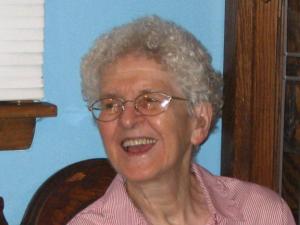
At Grandmother's house

 ***

What are some of the things you’ve been blessed with during 2011? Do you have some goals for 2012 you’d like to share? Did you have a pleasant holiday season this year?

The Wonder of Your Love, by Beth Wiseman, is a sweet story of a 40-year-old Amish widow named Katie Ann who is struggling to raise her baby son alone. She meets an Amish widower, Eli, who has raised his 6 children and is looking forward to spending time travelling and enjoying a life with fewer responsibilities. Eli is attracted to Katie Ann, but not interested in starting another family. Katie Ann was betrayed by her first husband, and is afraid to trust another man. Though they have a lot in common, neither of them is interested in anything but friendship—but God has other plans.

Eli’s family lives far away, and neither he nor Katie Ann wants to move away from those they love. Despite their growing attraction for each other, there are obstacles to overcome before they can find happiness together.

This is a well-written, enjoyable book. I liked the characters and the plot kept me interested. The secondary characters are involved in subplots that add to this story and also make it clear there will be future books in this series. This story was easy to follow even though I haven’t read the first book in the Land of Canaan series. I recommend it to anyone who likes stories about the Amish, or romances.

The Wonder of Your Love was given to me by the publisher, Thomas Nelson, for review.

Whether writing or speaking, the words we use convey images to our audience.  The literal, dictionary definition of a particular word is its denotation; the implied meaning or perception associated with it is its connotation.  Selecting the right words for the thoughts we want to communicate requires knowing both their literal meaning and the emotional context surrounding them.

Many words have positive, negative, or neutral connotations that add color to their literal meanings. For example, calling someone a chef will generally imply more skill and prestige than saying they are a cook, even though both words denote a person whose job is preparing food to eat. Saying a woman’s hair looks nice can have a neutral, or perhaps negative, connotation even though the word “nice” is generally considered complimentary. Seeing the name of an inner-city gang scrawled across the wall of a building might make a gang member feel pride, but the same sight might incite anger or fear in other people in the community. Factors such as age, culture, education, and life experiences will affect how a person perceives certain words. 

Using words that connote more than their literal meaning can affect the tone and mood of what we write, and adds depth to both fiction and nonfiction by stimulating the reader’s imagination and invoking an emotional response.


.

What are some words you react to based on their connotation more than their denotation?  What type of words do you view as “neutral?”  Do you think about the meaning of the words you are using more when you are writing than when you are speaking?

Knock ‘em Dead, the Ultimate Job Search Guide 2011 by Martin Yate, CPC, is an excellent resource book for anyone interested in applying for a job. It provides detailed information about writing resumes, networking, appropriate attire, what to expect at an interview, and how to handle a job offer. The author explains what certain types of interview questions are meant to reveal, and gives tips on how to answer them. He stresses the importance of knowing your own skills and weaknesses, and suggests how to use that knowledge to help you in your job search.

This isn’t the type of book I could read from beginning to end, though I tried. I ended up browsing the chapters, skimming through parts that didn’t seem related to my needs and reading the sections that fit my situation. The part about resumes was especially helpful to me as I hadn’t written one since employers began putting them into databases. I didn’t realize that many employers screen resumes with computer programs looking for keywords to determine whether or not the applicant might be a good fit for the job. The examples of potential interview questions, and the reasoning behind them, were very interesting. I plan to keep this book for future reference.

Although many of the topics are useful for any type of applicant, the majority of the information seems geared toward business professionals. Those looking for unskilled work would probably not find it as beneficial, but over all I would recommend this book.

.
The publisher provided this book to me for review.

Inkpop.com is a website run by Harper Collins Publishers for those interested in writing for young adults. It offers a blog, author interviews, a forum, live chats on publishing-related topics, and book reviews. Members have the opportunity to post their own novels, short stories, and poetry for critique by fellow writers. They can give input on the works posted via a ranking system, and the top 5 in each category are reviewed by Harper Collins editors at the end of each month. This doesn’t guarantee any of the projects will be accepted for publication, but it is a possibility.

Though I haven’t joined the site, I like many of its features.

  • It’s easy to navigate, colorful, and looks as though it’s designed by professionals.
  • The forums are active, and the threads I read show members interacting and trying to help each other.
  • The blog provides helpful information, including writing tips, interviews, and book reviews.
  • Live chats with authors, marketers, and other publishing professionals give members a chance to ask questions and receive answers from people with more expertise than themselves.
  • The instructions for uploading writing projects were clear and simple.

The site’s primary target is writers of young adult fiction, and many of the members appear to be young writers. Though I don’t fit into either category, I thought the site looked interesting and ended up reading several of the projects that were posted, as well as a few of the book reviews. Over all, I would feel comfortable using this site if I wanted to get feedback from other writers on a young adult project, or wanted to learn more about that genre.

Have you used Inkpop or a similar site? If so, was it a good experience? What advantages or disadvantages do you see to posting work on a site like that for feedback?

I’ve frequently heard that writers are supposed to “show instead of tell,” but that isn’t always easy to do. When it comes to settings, I think it can be especially hard.


Setting is more than a location or time period. Among other things, it provides a frame of reference for readers, affects the tone, supports a theme, and adds to characterization. It can also detract from those aspects of a story if the setting isn’t appropriate or memorable.

Sometimes pictures speak louder than words, but unless we’re writing a picture book we must depend on words to convey our meaning. Long narratives describing the setting can be overwhelming and boring, and many people skim over those kinds of passages (me, too!). It can be more effective and interesting to integrate specific, important details of the setting into the story itself, allowing readers to imagine the big picture.


To illustrate my point, I’ve included a few photos from my recent vacation. With each, I’ve added a basic caption regarding the setting; underneath I’ve mentioned why the picture is memorable to me. I hope those comments will help you get a feel for the setting where each one occurred. (Plus this gives me a chance to share a few of my favorite vacation photos without violating my blog’s writing-related theme. :) )


Conservatory at the Bellagio hotel

Thousands of flowers blended with fountains, birds, and storybook characters in a fantastic panorama at the Bellagio hotel.


Bally and Paris hotels at night

The lights at night made even conservative structures like the Bally hotel appear amazing, while turning the beautiful ones into spectacles that took my breath away.  


Dinner on Thursday

This decorated chicken breast resting on a few pieces of asparagus was the main course in the most expensive meal I ever ate.


view from the plane before takeoff

I never expected to see palm trees lining the roads while mountains loomed in the distance. Nothing at all like rural Indiana.


Here’s one where the setting wasn’t important; it was the people I was with that made this one memorable.

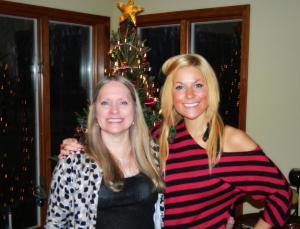
Lisa and Carol

I don’t even remember exactly where we were, but I was so tired I couldn’t keep plodding along. Getting a picture taken with my daughter gave me a welcome break without having to whine that I was tired!


For more information on setting, I recommend these sites:


My post from 4/13/10 on the importance of setting.

Setting Is More Than Mere Time And Place    An article on setting. The site also covers many other writing-related topics.

Setting: Writing a Story With Atmosphere This article discusses setting in some depth. It also contains lots of helpful tips on writing novels.


.

Do you focus on the setting as much as you do the plot and characterization? Is setting important in nonfiction? What details do you like to know about the setting when you’re reading a book? Have you gone anywhere interesting on vacation this year?

My birthday was Saturday, and we celebrated all weekend. While having my family with me was the best present, I have to admit that the Nook Color they gave me is wonderful! I’ve gotten very little done this week besides figuring out how to work it and reading book reviews.

Having never used an e-reader, I wisely read the Quick Start guide online before I turned on my Nook Color. It was easy to understand, so I had no problems getting registered and ready to read.

B&N pre-loaded my Nook Color with Little Women, Dracula, and Pride and Prejudice, along with some sample chapters from a couple of modern books. None of those interest me, so I’ve spent hours scrolling through the Nook Store looking for books I might actually want to read. With so many to choose from, you’d think I could have loaded up my e-reader within minutes—but so far I have picked out 8 full books and a few samples. All but 4 were free.

There are lots of reviews on the Web covering the pros and cons of buying the Color Nook, and as a non-techie I can’t add to or dispute any of their claims. For those who want a reader’s opinion, however, here are a few things I like about it and a few I don’t:

AWESOME:

  • It’s beautiful!
  • The colors make my shopping easier because I’m attracted (or not) by the book covers. Several of my purchases were books whose covers caught my attention as I scrolled through the store.
  • The buttons are easy to figure out and I’ve not had any problems navigating the screens. This really doesn’t require much skill to use.
  • The Search screen makes it easy to find books by author or title, or I can browse by categories.
  • Each book has sample chapters I can download before making up my mind whether or not to buy a book. This lets me see if I like the writer’s style, gives me a better idea of what the book is about, and also lets me see if there are major problems with the formatting or navigation. This is especially helpful on the nonfiction books where I want to be able to go directly to certain chapters rather than read the whole thing from beginning to end.
  • Most books have customer reviews that let me know when there are big problems with editing, or if the book is a reprint rather than a new release. (Some books show a published date for 2011 or 2010 but don’t show that the original copyright was much earlier.) This is helpful as some of my favorite authors have written so many books I can’t remember which ones I’ve already read. I would have purchased several thinking they were new releases except for the comments in the reviews alerting me to the fact they were older books.
  • I can adjust the brightness of the screen to read in low light without distracting the people around me. This is perfect for times other family members are watching movies I’m not interested in, or for reading my e-Bible at church.

NOT SO AWESOME:

  • The screen is really, really touchy. When scrolling through lists, I often touch the titles in such a way that a book I’m not interested in pops up. I have to tap the x in the corner to close it out, and that’s so close to the Buy button that a few times I’ve hit it by accident.  If you double click on the Buy button, you’ve bought the book as it switches from Buy to Confirm after the first click. The second click downloads it and charges your account for the book.
  • It didn’t come loaded with the recent major program upgrade. The B&N site said the upgrade would be automatic, but after 3 days I still didn’t have it. I was able to follow the instructions for manually upgrading by loading the program on my laptop and sending it to my Nook Color via a USB cable, but I was nervous I might mess up something. (I didn’t, though, so it’s unlikely anyone would have a problem doing it.)
  • It’s time consuming, and addictive. Browsing for books is much easier on a computer but I find myself scrolling through random categories on my Nook Color anyway. It’s so easy to download them once I locate one I want to read that I keep looking, and looking, and looking for just one more…
  • It is so thin, and the screen is so large, that I’m afraid I’ll damage it if I carry it in my purse. I’ve ordered a case for it, but that’s going to make it too bulky to fit in most of my purses.

I haven’t downloaded any apps yet. The upgrade made some interesting ones available, and I have a couple picked out to download later. One is supposed to let me view pdfs and Word documents, but since I don’t know how to get them transferred to my Nook Color there isn’t much point in buying it until I figure out the basics. The apps seem cheap to me, but I don’t know how the prices compare to those for other e-readers.

As I learn more about this, I’ll update this post to include any additional features or problems I encounter that I think might be helpful to know about. If you’re considering an e-reader, I suggest you compare this one to others on the market first. You might even prefer a tablet instead as they offer a lot more features, if price isn’t a consideration. However, I highly recommend the Nook Color for anyone primarily interested in reading books.

Here are some sites I found helpful when researching e-readers:

http://reviews.cnet.com/ebook-readers/?tag=mncol;srt&sort=popularity+asc  Reviews on CNet

http://www.the-ebook-reader.com/ebook-reader-comparison.html  Comparison Chart and Reviews

http://www.the-ebook-reader.com/nook-color.html Review of Nook Color

.EDIT JULY 11, 2011: I still love my Nook Color, but I’m disappointed that the battery doesn’t hold a charge nearly as long as I had expected. I read, at most, 4 or 5 hours a day and have to leave it plugged in or recharge it within 3 days. (Edited to add that I’ve been reading for longer periods, and have to charge it daily. Oh, well. It’s still my favorite toy!)

.

Do you have an e-reader? If so, which one do you use, and are you happy with it? Do you have any tips to share regarding buying or using an e-reader? If you’ve used the Nook Color, what did you like best/least about it? Do you know how to transfer pictures from a computer to Nook Color (I don’t!)?

Each event in a story takes place within a scene, showing the reader the action as it happens.

Short stories typically consist of only one or two scenes, while novels contain many. They vary in length, with some only a few paragraphs long and others covering many pages. However, most scenes follow a pattern similar to the typical story arc, beginning with a hook, building conflict or tension in the middle, and ending with a change in time/place, or a suspenseful moment (cliffhanger).

Each scene should serve a purpose in the story. It might:

  •   introduce or develop a conflict, theme, or character
  •   establish the setting (time period or place)
  •   create atmosphere (romantic, suspenseful, etc.)
  •   provide information that moves the plot forward

An author may use exposition to summarize what’s going on rather than including scenes to show all of the action as it happens. This provides a transition between scenes, and helps adjust the pacing of the story.


How do you determine if a scene is necessary? Do you like scenes that end on cliffhangers?


My daughter turned 21 last month. She’s a full-time college student, works 2 jobs, and is moving into her own apartment this weekend. One of her brothers is an honors student working as an intern on a government-funded study with one of his college professors. Her other brother has been working part-time while trying to get a computer-related business started.

Each of my children is awesome. Each is also different, with ideas and goals of their own. Looking at them now, I’m amazed by how quickly time has flown. They’ve grown from babies dependent upon me for just about everything, to young adults. I’m extremely proud of them.


Looking at my own life, I’ve grown, too. I’m at the stage where statistically speaking there are more years behind me than ahead of me. I’ve changed in many ways, hopefully for the better. Yet some of my ideas, dreams, and goals are still the same ones I had as a child. As I approach my own birthday this month, I’ve been thinking a lot about what it is that I’ve achieved and what I still hope to accomplish.

Though there are several things I still want to do, the one that’s relevant to this blog’s theme is this: I want to write a novel that brings warmth and hope to another person’s heart.

I’m working toward that goal slowly, but surely. It’s been sidetracked this spring due to family commitments, but I’m getting back to it today. I’m also trying to get back to blogging regularly, but may still be a bit sporadic with my posts until my kids get into their summer routine (and the laundry gets caught up!)

Please be patient with me as I get it all together. And to those of you who’ve asked me questions I haven’t answered yet, I apologize, and will respond as quickly as I can gather some useful resources for you.

Thanks all!

.

What are your goals? Are you making progress toward them? What is holding you back from achieving what you hope/plan to do?

In fiction the main storyline is the central focus, but there may be secondary plots involved, too. These subplots can pertain to the main characters or minor characters, and may be entwined with the larger plot. For example, the hero may be running for political office while also dealing with his wife’s alcoholism. Or, the heroine may have a brother who is involved in illegal activities that she is unaware of but which eventually cause conflict she must deal with.

Subplots should support the main plot but also be able to stand alone, with a beginning, middle, and end of their own. They may run through the entire story, or be resolved earlier. Often they’ll merge with the main plot at the story’s climax.

Subplots can enhance a story in several ways:

  1. Create tension or conflict
  2. Develop characters
  3. Help resolve the story’s outcome
  4. Give the story added depth
  5. Reinforce the theme
  6. Introduce characters or conflict to be featured in a future book
  7. Affect the pacing

Often subplots are incorporated into a story by using multiple viewpoint characters in alternating chapters. For instance, in the romance genre the heroine’s viewpoint is generally the primary one but the hero’s viewpoint is also used, giving depth to both characters. In many suspense stories, the author will focus on the protagonist’s viewpoint but include chapters from secondary characters’ viewpoints in order to create tension by revealing events the main character isn’t aware of.

Short stories typically don’t have more than one or two subplots, if any. Novels will have several that are of varying importance to the main storyline, but all subplots should support the main plot rather than overshadow it.


Can you think of any ways using subplots can be detrimental to the story instead of enhancing it? How many subplots is too many?


Older Posts »

Follow

Get every new post delivered to your Inbox.

Join 56 other followers